 MYSTIC ROSE
Angels · Sources & Symbolism · 12 September 2026 · 9 min
Angels: Names, Traditions and the Images We Give Them
An illustrated guide to twelve names from biblical, apocalyptic and mystical traditions — with the sources and symbolism kept in view.
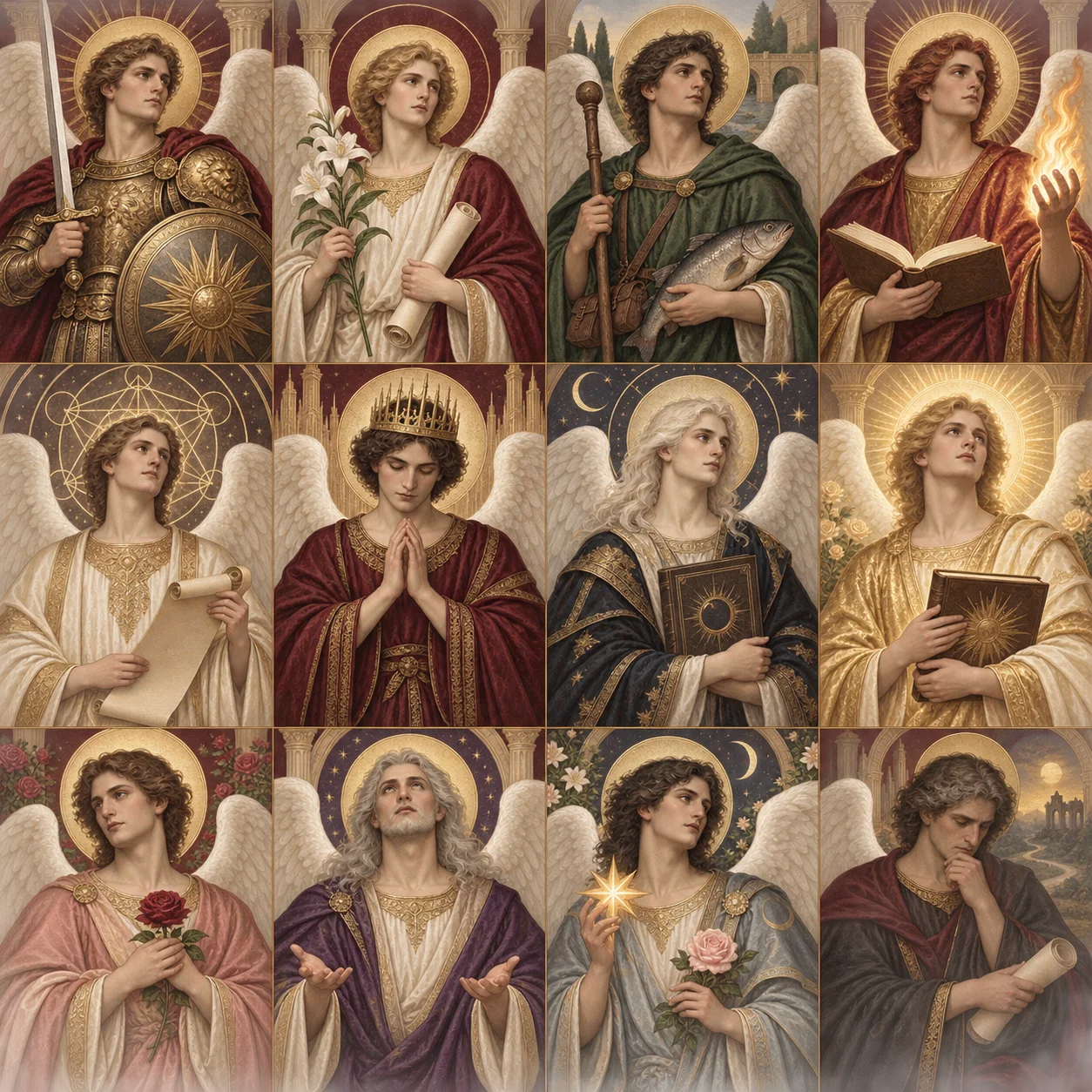
An angel’s name carries a history. Before it becomes a calendar portrait, it belongs to a text, a religious community or a later interpretive tradition. Reading those histories makes the artwork more meaningful.
This article introduces the twelve names selected for the Mystic Rose calendar concept. It is a curated selection, not a complete register of all angels or a universally accepted list of twelve archangels. The traditions represented here do not all recognise the same names or give them equal authority.
About the images: each portrait is an original AI-assisted artistic interpretation made for this article. The attributes are explained below. Facial features, skin tone, clothing and gender presentation are artistic choices, not verified likenesses. A picture alone cannot establish an angel’s identity.
Michael
Tradition: Biblical tradition.
Name: Traditionally interpreted as “Who is like God?”
Daniel 12:1 presents Michael as a great prince who stands for the people. Revelation 12:7–9 depicts him leading angels against the dragon. Protection and steadfast courage follow from these narratives.
Our illustration uses armour, a sword and a shield to express the warrior imagery of Christian art. The face and clothing are artistic choices.
Gabriel
Tradition: Biblical tradition.
Name: Traditionally interpreted as “God is my strength”.
In Luke 1, Gabriel announces the births of John and Jesus. In Daniel 8–9 he helps explain visions. These passages establish his role as a messenger and interpreter.
The scroll signifies a message. The lily recalls later Annunciation art; it is an artistic attribute rather than a physical description in Luke.
Raphael
Tradition: Tobit · Catholic and Orthodox biblical tradition.
Name: Traditionally interpreted as “God heals”.
Raphael accompanies Tobias in the Book of Tobit and reveals his identity in Tobit 12:15. The story connects him with companionship, a journey and healing. Tobit belongs to Catholic and Orthodox biblical canons and appears among the Apocrypha in many Protestant editions.
The traveller’s staff and fish refer to the journey and the fish episode in Tobit. Healing here describes his role in the religious story.
Uriel
Tradition: Apocalyptic literature and later Christian traditions.
Name: Commonly interpreted as “Light of God” or “Fire of God”.
Uriel appears as Ezra’s interpreter in 2 Esdras 4 and among named angels in 1 Enoch. The authority of these books differs between religious communities. His place in angelic lists is therefore tradition-specific.
The flame and open book express illumination and interpretation. Their arrangement is our artistic reading, not an eyewitness portrait.
Metatron
Tradition: Rabbinic and Jewish mystical literature.
Name: The origin and meaning of this name remain debated.
Metatron appears in rabbinic literature as a heavenly scribe. In 3 Enoch he is associated with Enoch’s transformation and an exalted place in the heavenly court. He is an angelic figure of later Jewish literature, not a named character in the Hebrew Bible.
The scroll recalls the scribe. The geometric radiance is a contemporary design choice; it should not be mistaken for a scriptural description of “Metatron’s Cube”.
Sandalphon
Tradition: Rabbinic and Jewish mystical traditions.
Name: Often connected with a Greek word for a fellow brother or companion.
Sandalphon is associated in Jewish traditions with the heavenly crown and the elevation of prayer. Accounts differ, and later mystical systems develop his relationship with Metatron in different ways.
The crown and prayerful posture refer to this devotional imagery. Modern associations with music are not a universal definition of his role.
Raziel
Tradition: Jewish mystical and magical literature.
Name: Commonly interpreted as “Secret of God”.
Raziel is associated with divine mysteries and the Sefer Raziel tradition. Stories describe the transmission of hidden knowledge to Adam. These are traditions of mystical literature, distinct from the narrative books of the Hebrew Bible.
A closed book represents mysteries and learning. Its cover and the angel’s appearance are original artistic choices.
Jophiel
Tradition: Later Jewish and Christian angelology.
Name: Commonly interpreted as “Beauty of God”.
Jophiel, also written Iophiel or Yofiel, appears in later accounts of wisdom, learning and beauty. Sources assign differing ranks and correspondences. These should be read as particular traditions rather than one agreed biography.
Our book and golden radiance express wisdom and beauty. Other artworks use a flaming sword; no single visual attribute is compulsory across traditions.
Chamuel
Tradition: Later angelology and modern devotional practice.
Name: Spellings and explanations vary; Camael and Kamael are often associated names.
Chamuel is often presented in contemporary devotion as an angel of love and peace. Older systems using similar names can emphasise strength or judgement. Those different traditions should not be merged into a single biblical identity.
The rose is our symbol for the modern theme of loving attention. It is not evidence that a rose-bearing angel in an older painting must be Chamuel.
Zadkiel
Tradition: Later Jewish and Christian angelology.
Name: Commonly interpreted as “Righteousness of God”.
Zadkiel is associated with kindness and mercy in later angelology. Some traditions identify him with the angel who stops Abraham’s sacrifice, but Genesis itself does not name that angel Zadkiel. Other identifications also exist.
Open hands express mercy in our illustration. This is a chosen visual metaphor rather than a fixed physical description.
Haniel
Tradition: Jewish lore and Western esoteric traditions.
Name: Commonly interpreted as “Grace of God”.
Haniel appears under several spellings, including Anael in related traditions. Western esoteric systems often associate this name with Venus and with Netzach. Such correspondences belong to those systems and vary between sources.
The star and rose allude to the Venus association. Colour, facial appearance and gender presentation are artistic decisions.
Jeremiel
Tradition: Apocalyptic textual tradition.
Name: Often interpreted as “God will have mercy”; forms of the name vary.
Some versions of 2 Esdras 4:36 name the archangel Jeremiel in a discussion of the waiting of the righteous. Manuscripts and translations also use other forms or names. Identifying every Remiel, Ramiel and Jeremiel as precisely the same figure oversimplifies this textual history.
A scroll and reflective posture evoke the dialogue with Ezra. The modern theme of reviewing one’s life is a devotional interpretation, not a literal visual description in the passage.
Our month-by-month arrangement is an editorial design choice, not an ancient liturgical calendar.
Editorial note: Factual claims are separated from symbolic interpretation. Mystic Rose is independent of the organisations discussed.